
Upgrade to heavy-duty sealed nylon rollers to reduce operational noise, friction wear, and track binding.
Garage door rollers guide the door panels along the tracks. Over years of use, standard metal rollers collect dust, lose lubrication, and develop play in their bearings. This causes the door to squeak, shake, or bind in the track curves. Replacing worn rollers with heavy-duty sealed nylon alternatives is a simple way to restore quiet and smooth operation.
Our technicians inspect the roller stems, hinges, and track channels. If you need a roller replacement, we replace the old rollers and realign the tracks to prevent binding. We also check the hinges for cracks and wear, as loose hinges can cause the rollers to twist inside the tracks, and we can connect that work with maintenance or track repair when the system needs broader adjustment.
Sealed nylon rollers feature ball bearings enclosed in a protective casing. This design keeps out dirt, dust, and moisture, ensuring smooth rotation without the need for regular oiling. The nylon tire also runs quieter on the steel tracks than metal rollers, significantly reducing noise transfer into the home, and if the issue is related to opener performance we can inspect that as well.
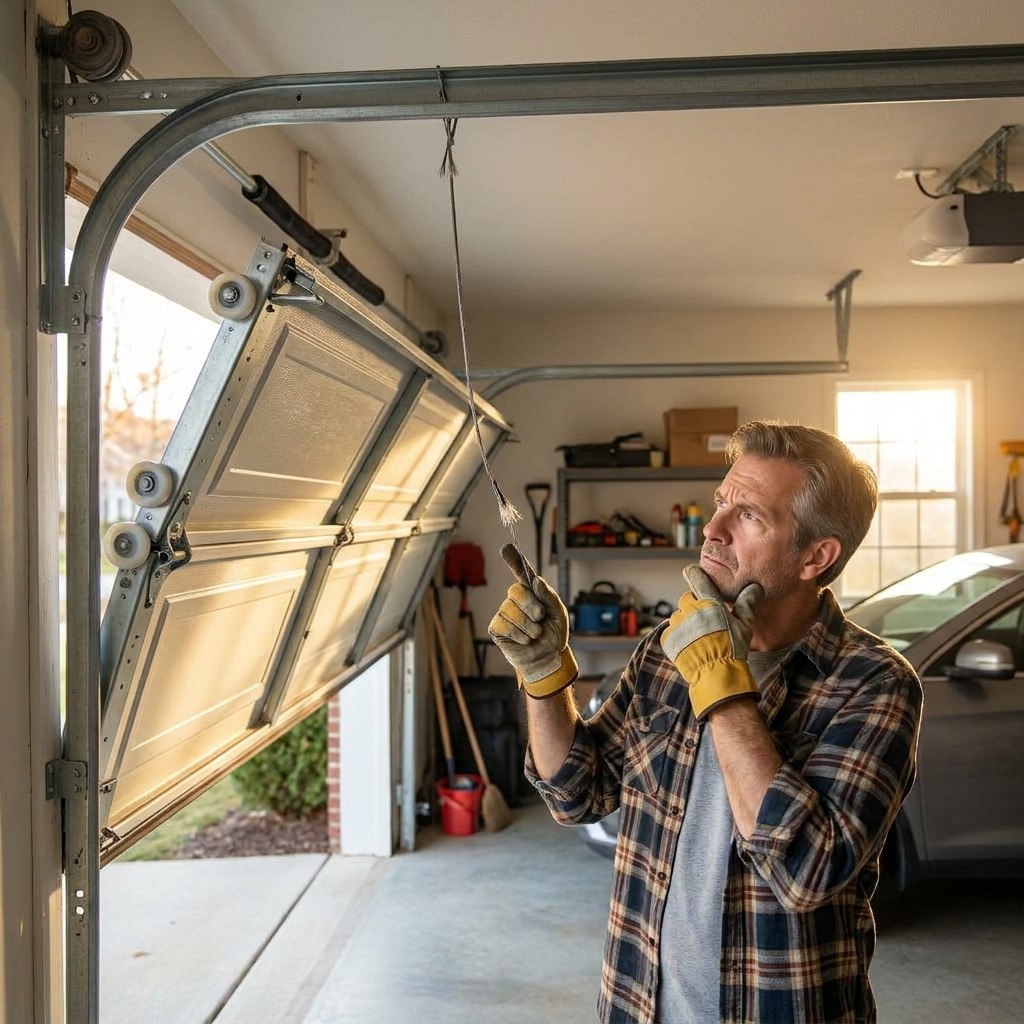
Replacing rollers requires working near high-tension brackets. The bottom roller brackets are connected to the lift cables and are under spring tension. Removing them without proper safety procedures can cause injury. Our team uses safety fixtures to replace rollers on all sections, including the bottom brackets, safely.
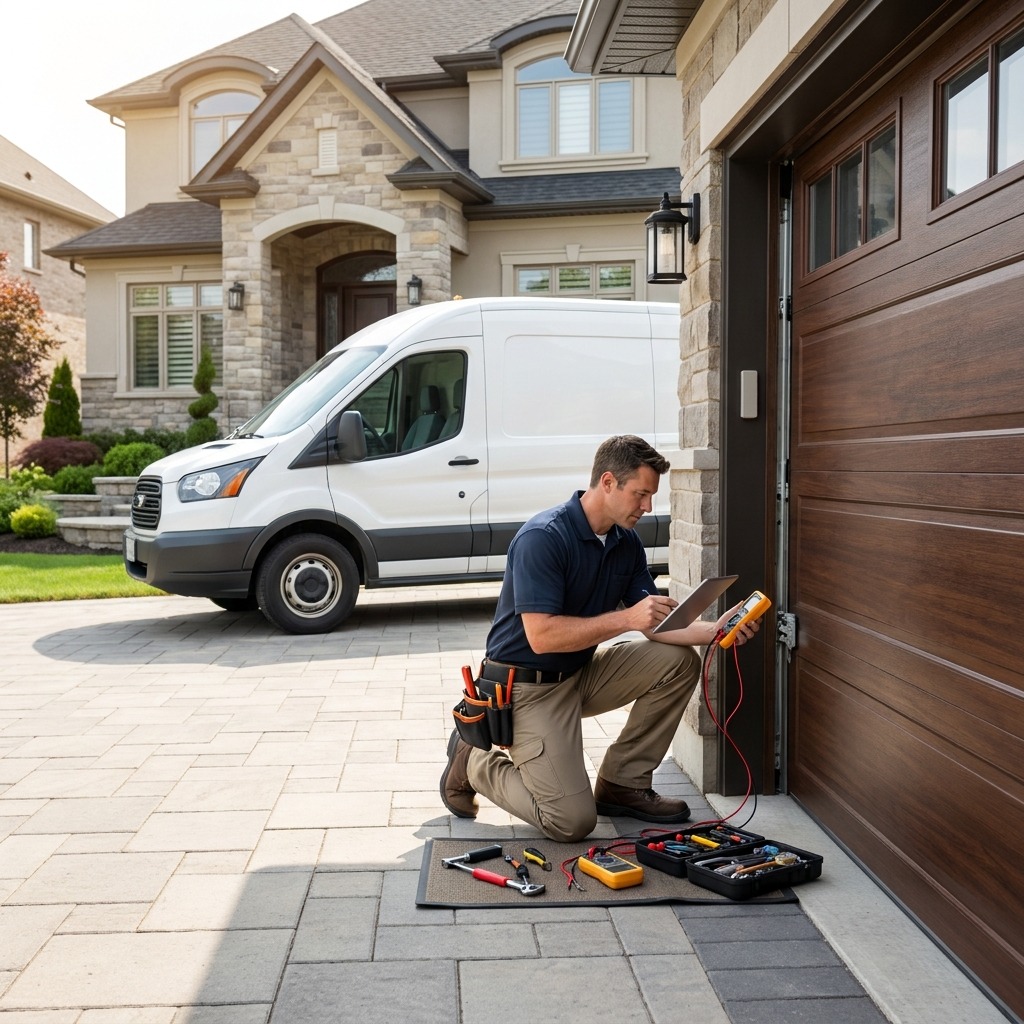
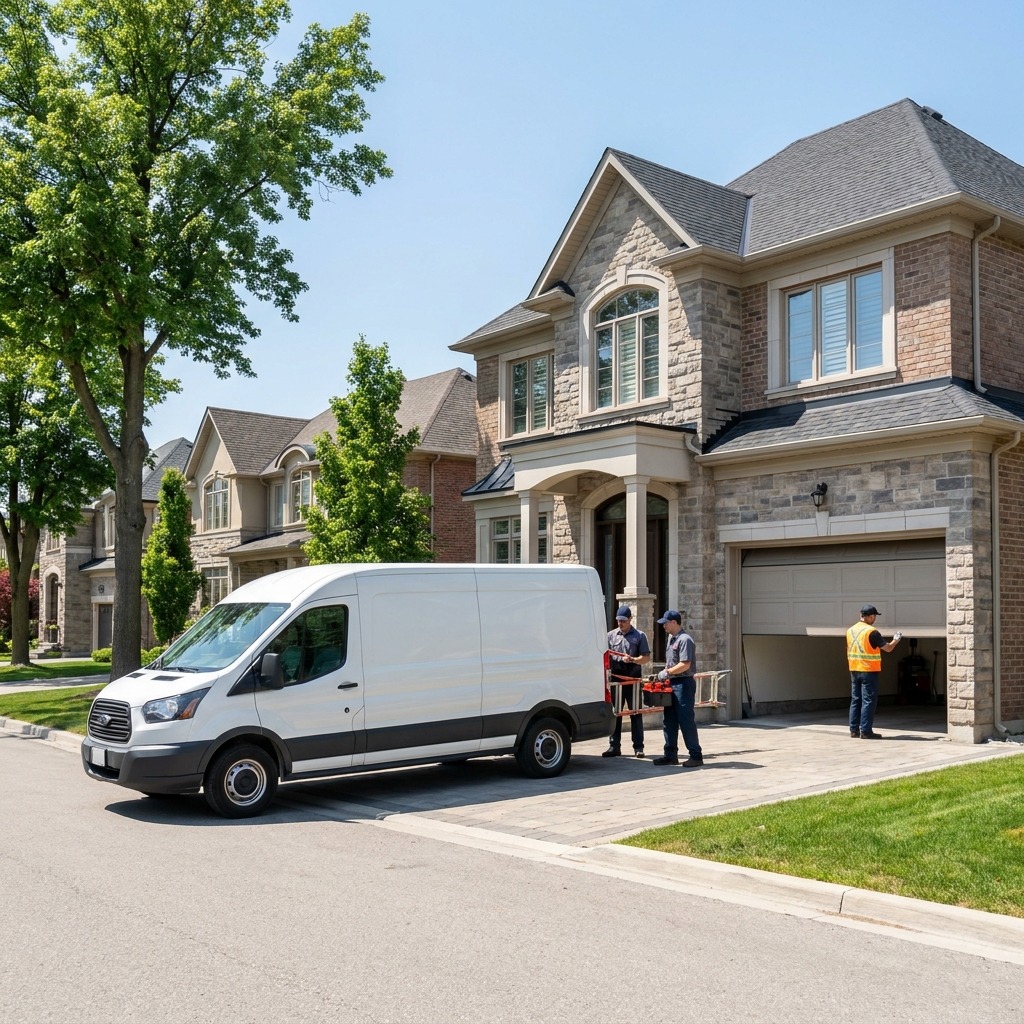
Real technicians from our GTA service vehicles executing precision calibration and safety tests.
High-cycle torsion and extension springs selected and calibrated exactly to your door's weight and width dimensions to guarantee balance.
Replacement of frayed or snapped aircraft-grade steel lift cables. Re-anchoring and alignment on cable drums to prevent slack.
Straightening or replacing bent vertical and horizontal tracks. Re-anchoring tracks to wall framing to ensure parallel movement.
Understanding the mechanical design and load distribution of your residential or commercial garage door system is essential to maintaining high safety standards.
Plastic rollers lack ball bearings and wear out quickly. Steel rollers with open bearings are durable but noisy, requiring regular oiling to prevent rust. Nylon rollers with sealed ball bearings offer the best performance, combining quiet operation, durability, and low maintenance. The sealed bearings prevent dust from entering the races, ensuring smooth rotation and reducing track wear.
If the tracks are misaligned, the rollers will twist in the channel, causing friction wear on the roller stems and hinges. We measure the spacing between the tracks and verify they are parallel. We also check the roller stems for excessive side-to-play, as worn stems can cause the door to wobble during travel.
We inspect the rollers for flat spots and worn bearings, checking for hinge damage and track alignment issues.
We replace the worn rollers section by section, inspecting the hinges for wear and cracks.
We check the track spacing, adjust the alignment, and run a test cycle to ensure smooth and quiet movement.
Detailed answers regarding overhead door mechanics, maintenance cycles, and safety practices.
Select your city below to get local service directions and emergency technician availability: