
Professional diagnostics, limit adjustments, remote programming, and gear replacements for belt, chain, and wall-mounted openers.
Automatic garage door openers are electro-mechanical devices that coordinate safety limits, remote frequencies, and physical lift force. When an opener malfunctions, it can display symptoms like starting and immediately reversing, making grinding noises without moving the door, or refusing to respond to remote controls. Our technical diagnostics isolate whether the failure is electronic (logic board, safety sensors, remote frequencies) or mechanical (stripped drive gear, worn belt, loose chain).
We service all major opener brands, including LiftMaster, Chamberlain, and Genie. If you need an opener repair, we calibrate limit switches, realign safety sensors, and replace stripped gear assemblies to restore normal operation. We also evaluate the door's physical balance, as a heavy door is the leading cause of stripped motor gears.
For related support, we also handle spring replacement, cable repair, and garage door maintenance to keep the full system safe and reliable.
Safety sensors, or photo-eyes, are crucial safety components in modern automatic door systems. They must be aligned parallel to each other and mounted no higher than six inches from the floor. If these sensors are dirty, out of alignment, or have frayed wiring, the opener will prevent the door from closing. We inspect the sensor housings, check the LED indicator lights, and replace damaged wiring harnesses to restore safety compliance.
Travel limits determine how far the door moves before stopping. Over time, these settings can shift, causing the door to slam into the floor or stop short of the header. We program the open and close limits and calibrate the force settings, ensuring the motor stops if it meets unexpected resistance. This protects your door panels and surrounding framing from impact damage.
Real technicians from our GTA service vehicles executing precision calibration and safety tests.
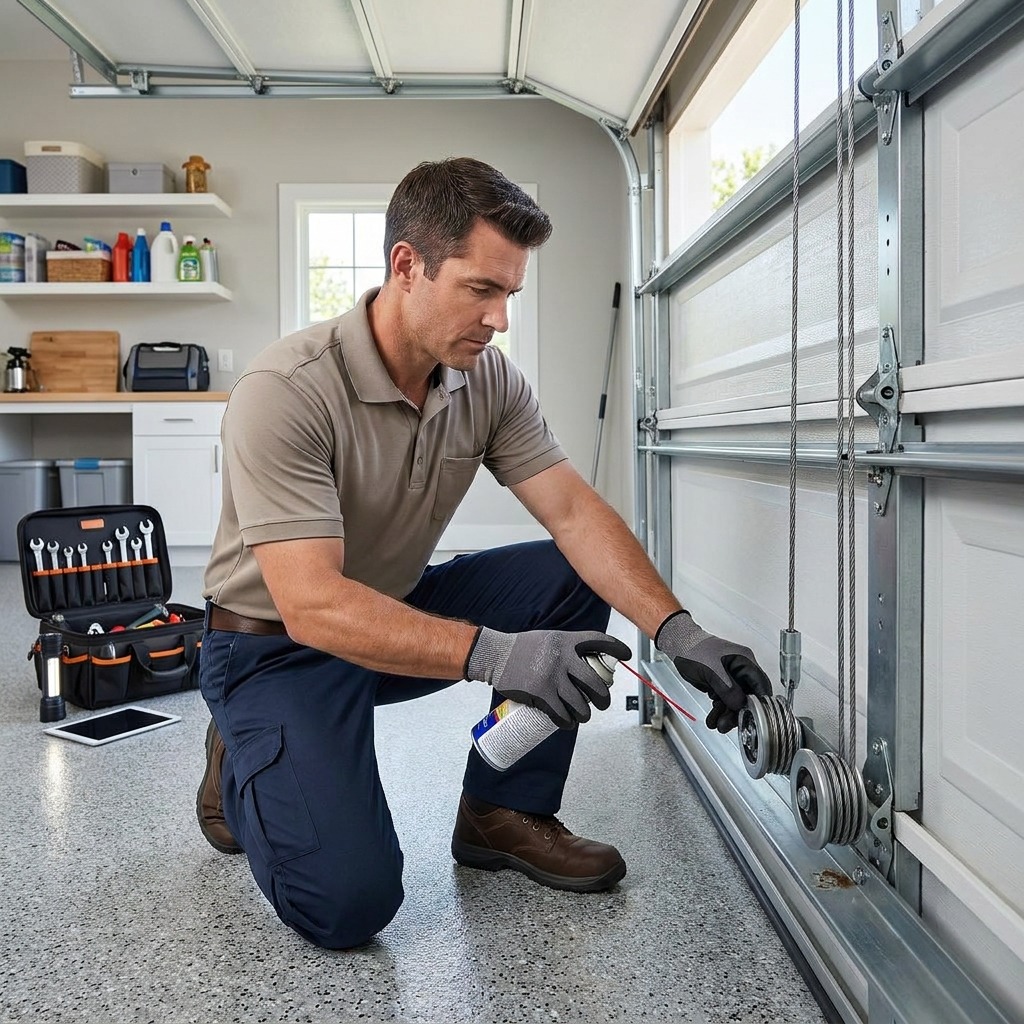
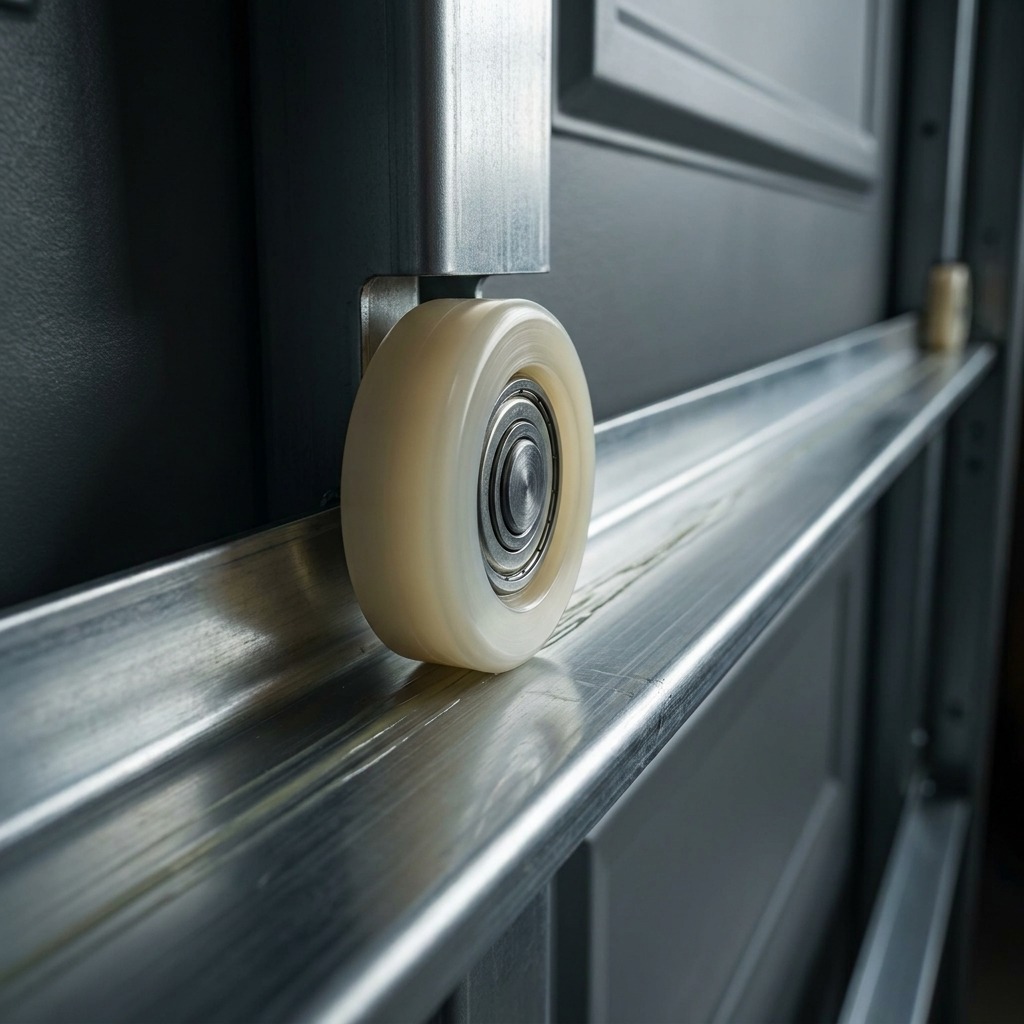
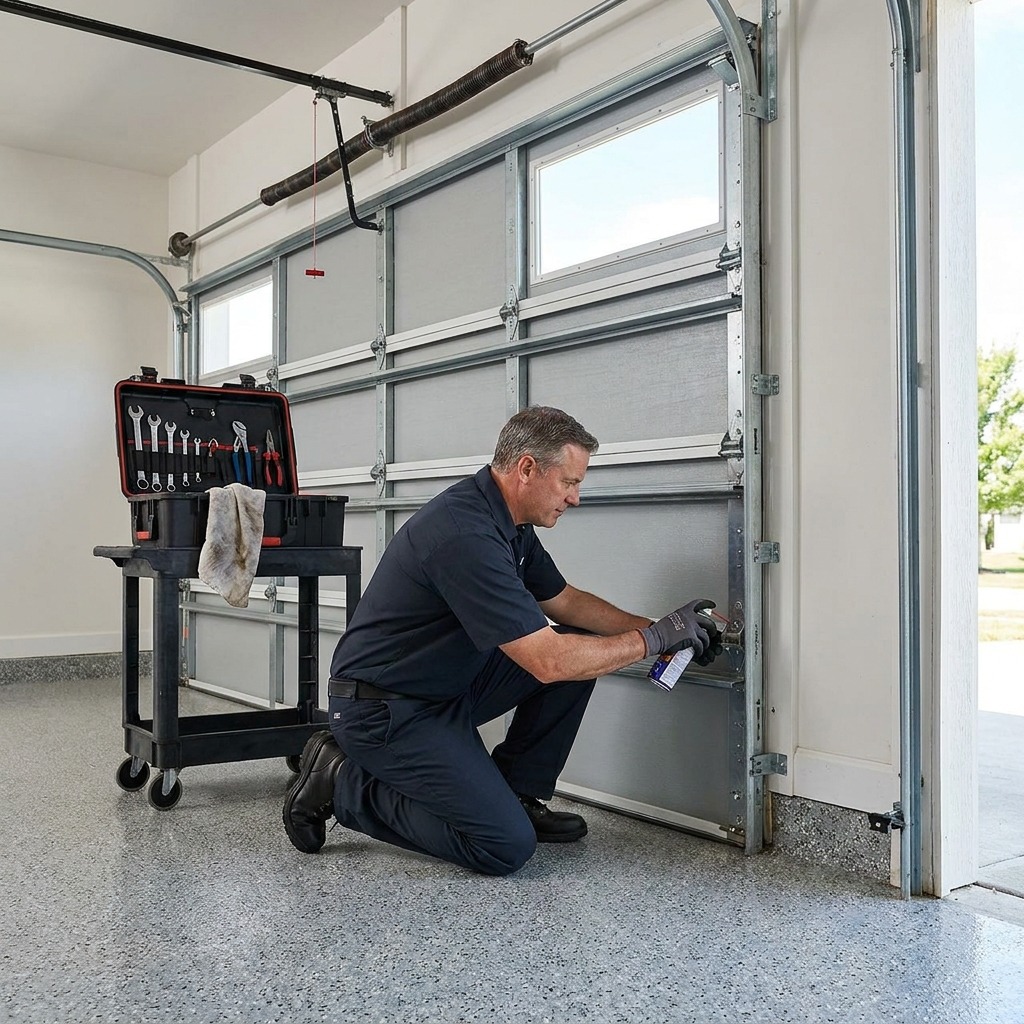
High-cycle torsion and extension springs selected and calibrated exactly to your door's weight and width dimensions to guarantee balance.
Replacement of frayed or snapped aircraft-grade steel lift cables. Re-anchoring and alignment on cable drums to prevent slack.
Straightening or replacing bent vertical and horizontal tracks. Re-anchoring tracks to wall framing to ensure parallel movement.
Understanding the mechanical design and load distribution of your residential or commercial garage door system is essential to maintaining high safety standards.
Chain-driven openers use a metal chain along a T-rail. They are durable and suitable for heavy wood doors, but they transfer motor vibrations into the home. Belt-driven openers replace the chain with a rubber belt reinforced with steel or polyurethane cords, making them extremely quiet and ideal for attached garages. Screw-drive openers use a threaded steel rod to move the trolley; they have fewer moving parts but require regular lubrication to prevent friction wear. We inspect and service all three drive styles.
Modern opener logic boards operate on radio frequencies (often 315MHz or 390MHz). LED light bulbs, neighborhood radio towers, or faulty home appliances can cause signal interference, reducing remote range. Furthermore, power surges can damage the sensitive microprocessors on the circuit board, leading to erratic behavior. We use diagnostic software and multimeters to verify if the logic board is receiving correct voltage or if it needs replacement.
We unplug the opener, open the motor chassis, and check for stripped plastic drive gears and drive shaft play.
We measure the sensor height, clean the lenses, check for wire corrosion, and test the safety reversing system.
We program the travel limits, adjust the force controls, test remote range, and lubricate the opener rail.
Detailed answers regarding overhead door mechanics, maintenance cycles, and safety practices.
Select your city below to get local service directions and emergency technician availability: