
Replacement of worn hinges, bearing plates, top fixtures, bottom brackets, and reinforcing struts to restore structural integrity.
Garage doors rely on a variety of hardware components to function. Over time, hinges can crack, bearing plates wear down, and brackets loosen, causing the door to operate roughly or sit crookedly in the tracks. Replacing worn hardware is a simple way to restore reliability and extend the life of your door.
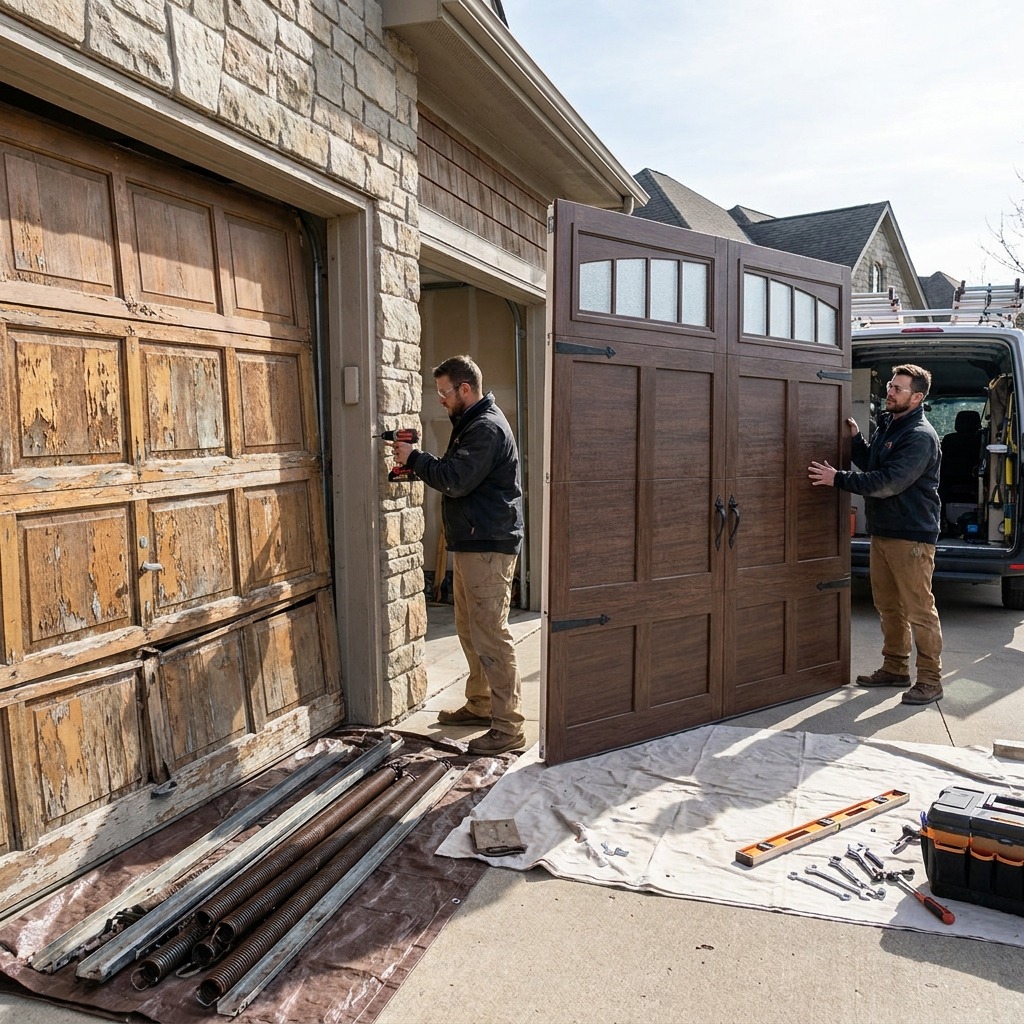
Our technicians stock a range of replacement parts on their service vehicles. If you need a hardware repair, we replace damaged hinges, reinforce weak panels with steel struts, and check the bearing plates to ensure smooth operation. We also inspect the tracks and brackets for stability.
Hinges connect the door panels and support the roller stems. Worn hinges can cause the panels to sag or bind, placing extra load on the opener. We replace damaged hinges with heavy-duty steel alternatives, ensuring the panels pivot smoothly as the door raises.
Bottom brackets hold the lift cables and bottom rollers, remaining under high tension from the springs. Worn or rusted brackets can fail, causing the cable to snap and the door to drop. During our service, we inspect and replace these brackets safely, ensuring a reliable repair.
Real technicians from our GTA service vehicles executing precision calibration and safety tests.
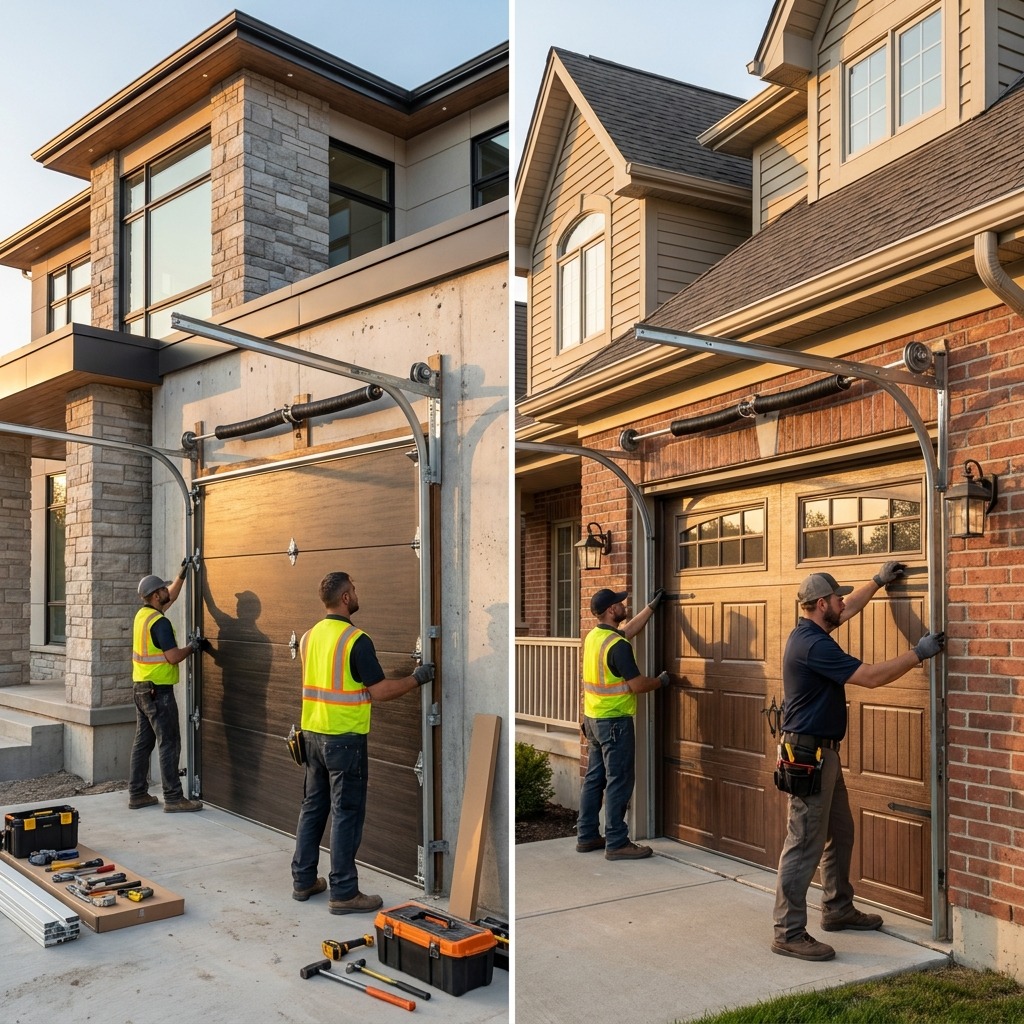
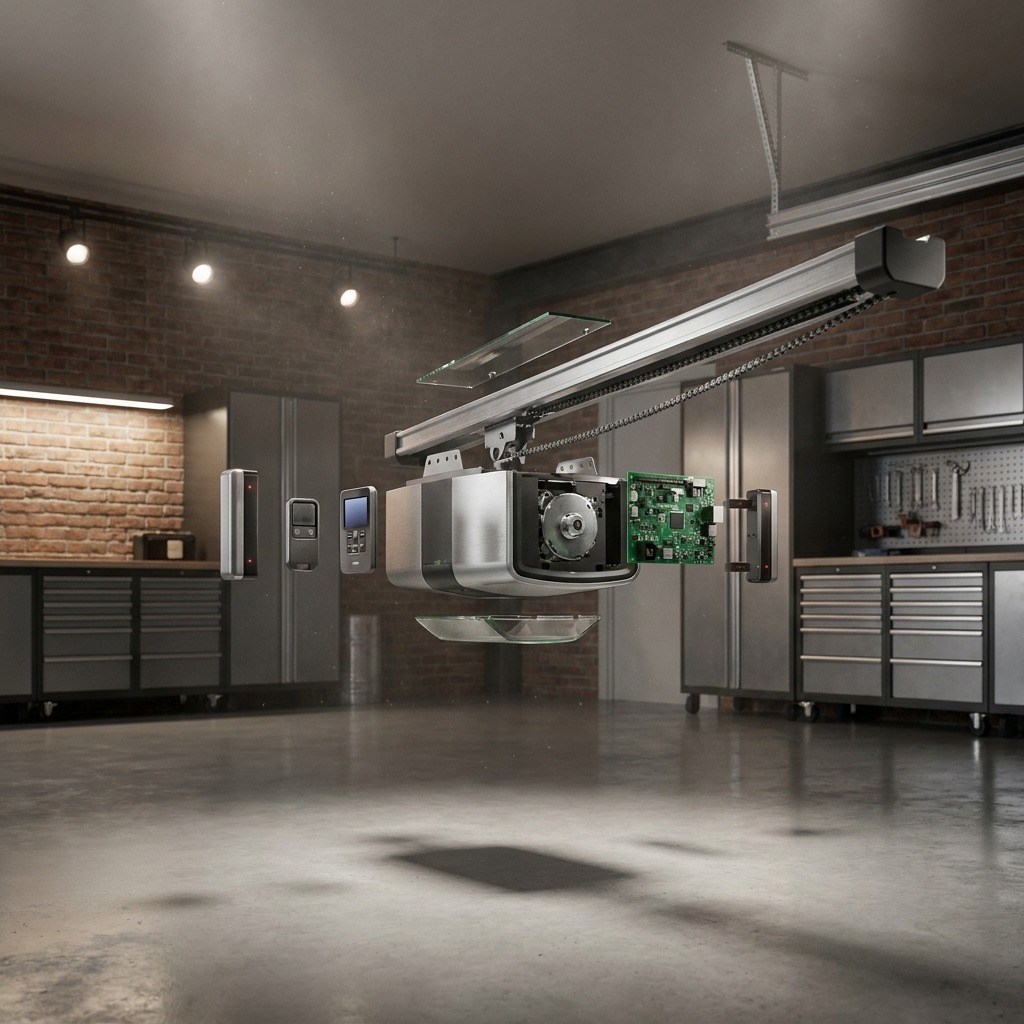
High-cycle torsion and extension springs selected and calibrated exactly to your door's weight and width dimensions to guarantee balance.
Replacement of frayed or snapped aircraft-grade steel lift cables. Re-anchoring and alignment on cable drums to prevent slack.
Straightening or replacing bent vertical and horizontal tracks. Re-anchoring tracks to wall framing to ensure parallel movement.
Understanding the mechanical design and load distribution of your residential or commercial garage door system is essential to maintaining high safety standards.
Hinges are stamped with numbers (usually #1 to #5) indicating their position on the door. Lower numbered hinges are located near the bottom, while higher numbers are mounted near the top to accommodate the track taper. They are manufactured in different steel gauges, with heavier 14-gauge hinges recommended for heavy wood or insulated steel doors. We replace worn hinges with matching gauge hardware to ensure even load distribution.
Steel reinforcing struts (U-bars) run horizontally across the back of the door panels to prevent bowing and sagging. They are crucial for wide double-car doors and doors connected to automatic openers. If a door bow or sag is detected, we install reinforcing struts to restore structural integrity and ensure smooth movement.
We inspect the hinges for cracks, check the bearing plates for wear, and examine the brackets for loose bolts.
We replace the worn hinges and brackets section by section, ensuring the panels are aligned.
We install reinforcing struts if needed, check the track alignment, and test the door movement.
Detailed answers regarding overhead door mechanics, maintenance cycles, and safety practices.
Select your city below to get local service directions and emergency technician availability: