
Professional mounting, track alignment, weather seals, and complete spring calibration for modern residential overhead doors.
Installing a new garage door involves mounting the tracks, aligning the sections, and calibrating the spring counterweight system. A poorly installed door can lead to issues like binding rollers, air leaks, or premature spring wear. Our team focuses on precision alignment and structural stability, ensuring your new door operates smoothly and quietly.
We install a variety of door styles, including steel, wood, and insulated aluminum. If you are planning a new garage door installation, we measure the headroom, backroom, and sideroom to select the correct track configuration. We also mount durable weather seals along the perimeter to keep out moisture and cold air.
Proper insulation is key to energy efficiency. Insulated doors utilize polyurethane or polystyrene cores to block thermal transfer, keeping your garage warmer in winter and cooler in summer. During installation, we ensure the section joints seal tightly and adjust the bottom rubber bulb to seal against uneven concrete floors.
If you are also dealing with opener issues, maintenance, or spring wear, we can coordinate those services alongside your installation so the system performs correctly from day one. You can also start with a free estimate.
The track geometry must be calculated to match the building's headroom. Standard track systems require 12 inches of clearance, while low-headroom systems use dual-track layouts to navigate tight spaces. We anchor the vertical and horizontal tracks to the wall framing using heavy-duty angle iron, ensuring a rigid foundation for your door.
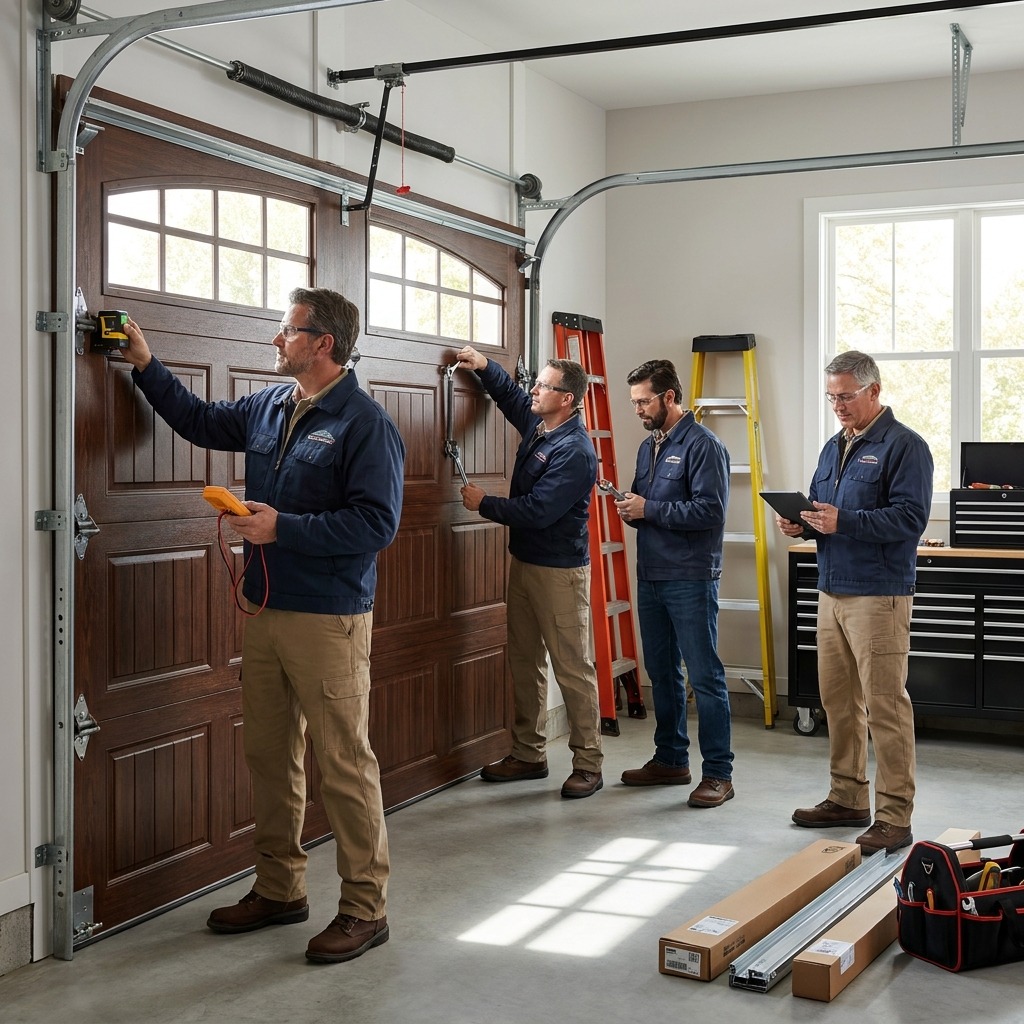
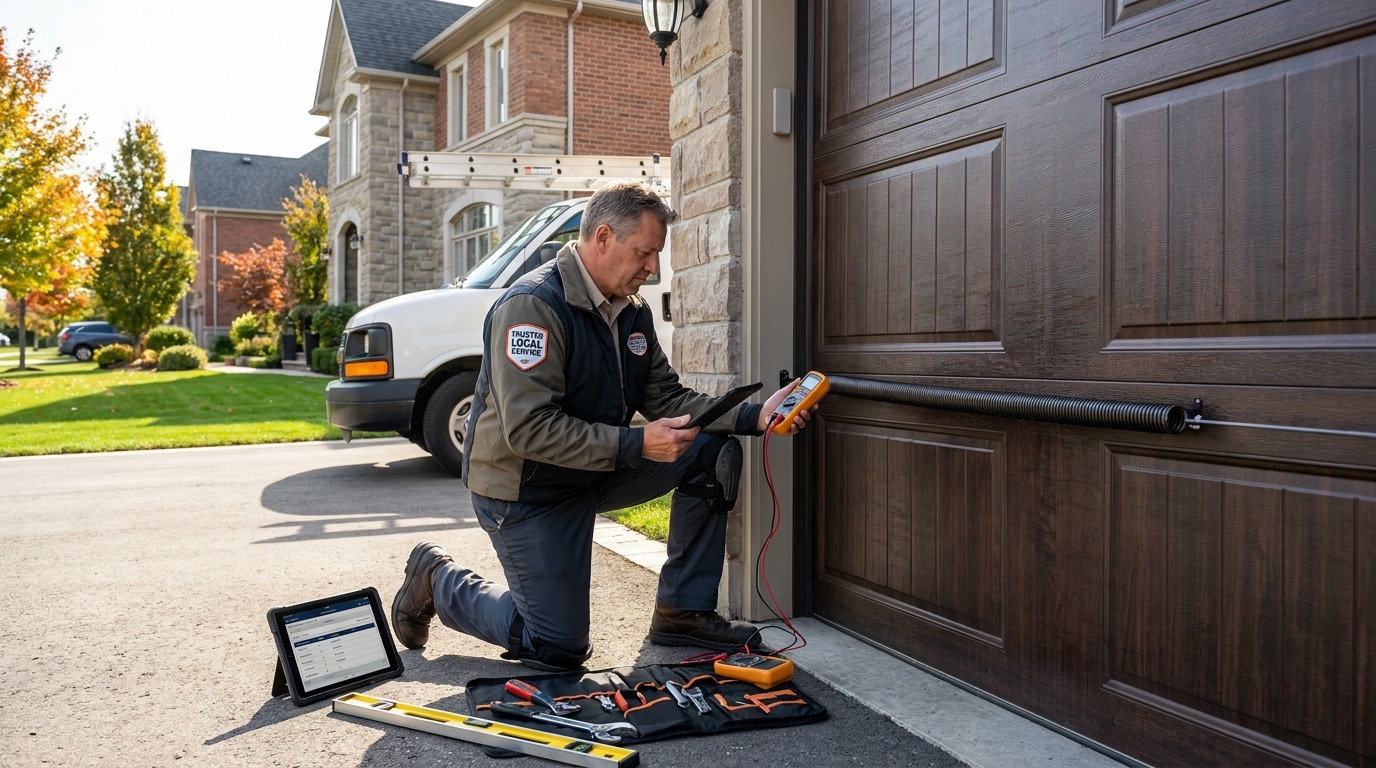
Real technicians from our GTA service vehicles executing precision calibration and safety tests.
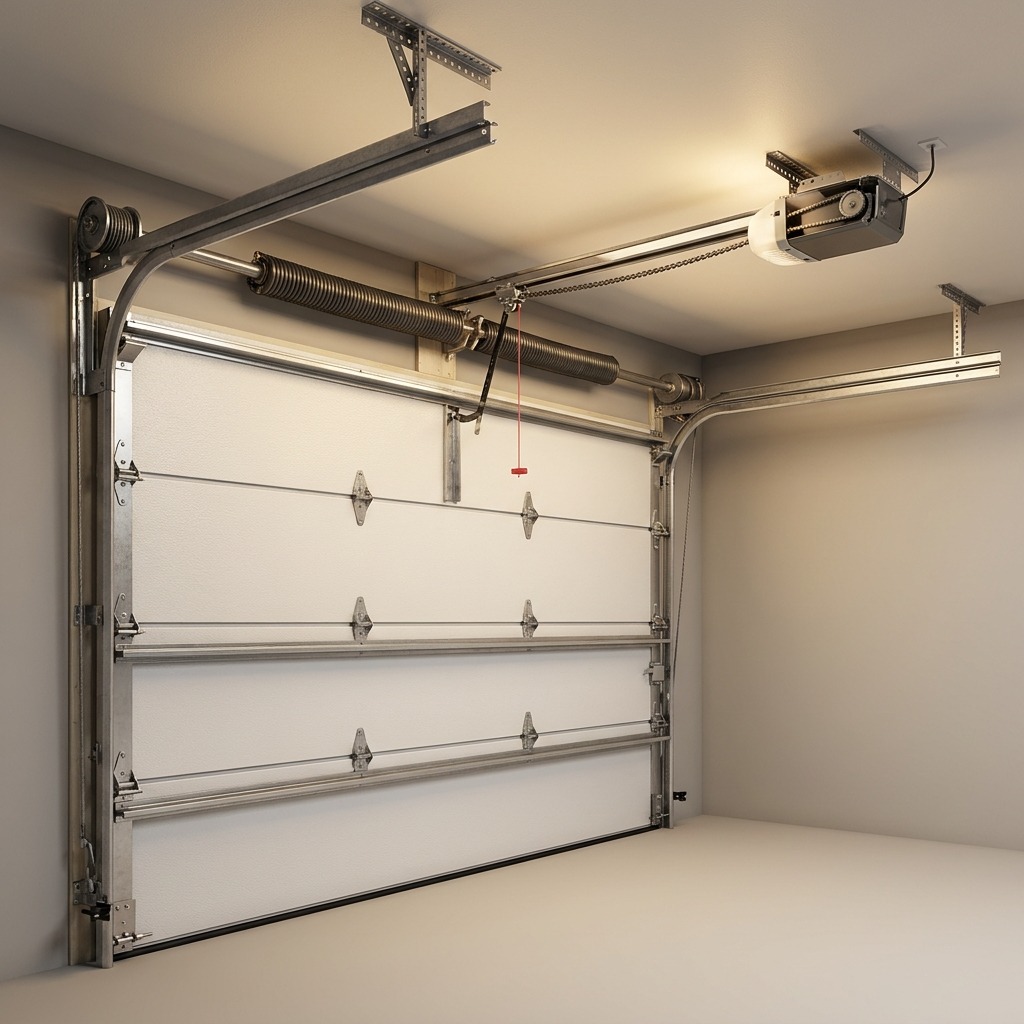
High-cycle torsion and extension springs selected and calibrated exactly to your door's weight and width dimensions to guarantee balance.
Replacement of frayed or snapped aircraft-grade steel lift cables. Re-anchoring and alignment on cable drums to prevent slack.
Straightening or replacing bent vertical and horizontal tracks. Re-anchoring tracks to wall framing to ensure parallel movement.
Understanding the mechanical design and load distribution of your residential or commercial garage door system is essential to maintaining high safety standards.
The insulating performance of a door is measured by its R-value. A higher R-value indicates better thermal resistance. Polyurethane insulation is injected between the steel skins, expanding to fill the section cavity and bonding the layers for added structural strength. Polystyrene insulation consists of pre-cut foam panels inserted into the door frame. We help you choose the right R-value based on whether your garage is attached or detached.
Garage doors must resist wind pressures to prevent structural failure during storms. High-wind areas require wind-load-rated doors reinforced with heavy-duty U-bars (struts) and heavier hinges. We verify that the tracks are plumb and parallel, adjusting the horizontal track pitch to ensure the door remains balanced throughout its travel path.
We inspect the door jambs, install the vertical track brackets, and align the vertical tracks parallel and level.
We place the bottom section, mount the rollers and hinges, stack the remaining sections, and secure the horizontal tracks.
We mount the spring shaft, install the calibrated torsion springs, hook up the lift cables, and connect the opener system.
Detailed answers regarding overhead door mechanics, maintenance cycles, and safety practices.
Select your city below to get local service directions and emergency technician availability: