
Professional replacement of frayed or snapped aircraft-grade steel lift cables and alignment on cable drums to prevent system jamming.
Overhead garage doors use high-tension steel lift cables to raise and lower the panels. These cables are secured to brackets at the bottom corners of the door and run up to drums keyed to the spring shaft. If a cable frays or snaps, the door will lift unevenly, jamming the rollers inside the tracks and potentially warping the door panels. This is a critical safety issue that requires immediate attention.
Our technicians utilize heavy-duty, galvanized aircraft-grade steel cables. If you need a cable replacement, we replace both cables to ensure even tension distribution on both sides of the door. We also check the cable drums for worn grooves and verify that the shaft is level, preventing the new cables from slipping off the drums.
For a full repair plan, we also connect spring replacement, opener repair, and garage door maintenance with cable service so the system stays balanced and safe. Reach out through our contact page for a fast estimate.
Cables are under constant tension from the springs. Attempting to loosen the bottom brackets without releasing the spring tension is dangerous, as the bracket can fly loose with immense force. Our team uses spring winding bars to secure the system before removing worn cables. We also inspect the drum set-screws and ensure the cables are wound in the correct direction along the drum grooves.
Fraying often occurs near the bottom bracket where the cable is exposed to moisture, road salt, and dirt. This environment causes the steel strands to rust and weaken. During our replacement service, we inspect the bottom roller brackets, track alignment, and spring tension to address the factors that contribute to cable wear, ensuring a long-lasting repair.
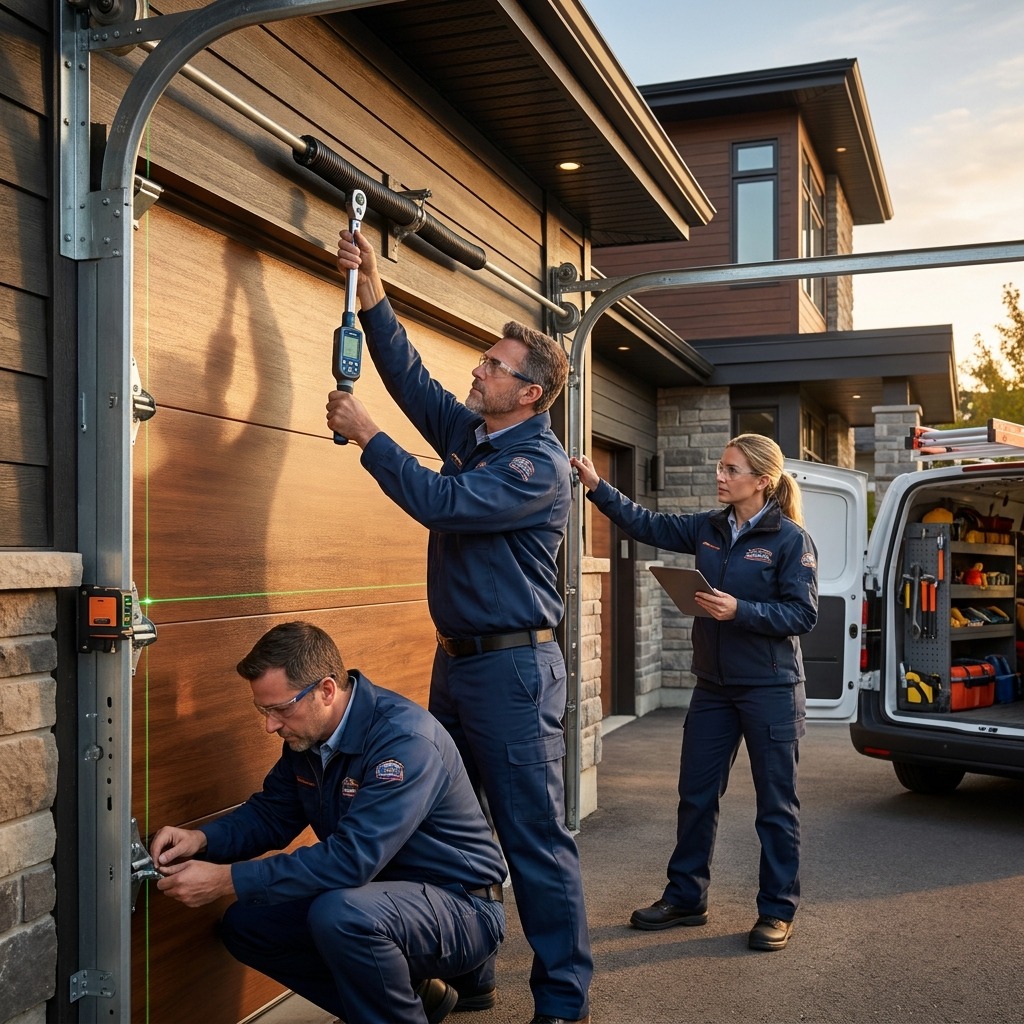
Real technicians from our GTA service vehicles executing precision calibration and safety tests.
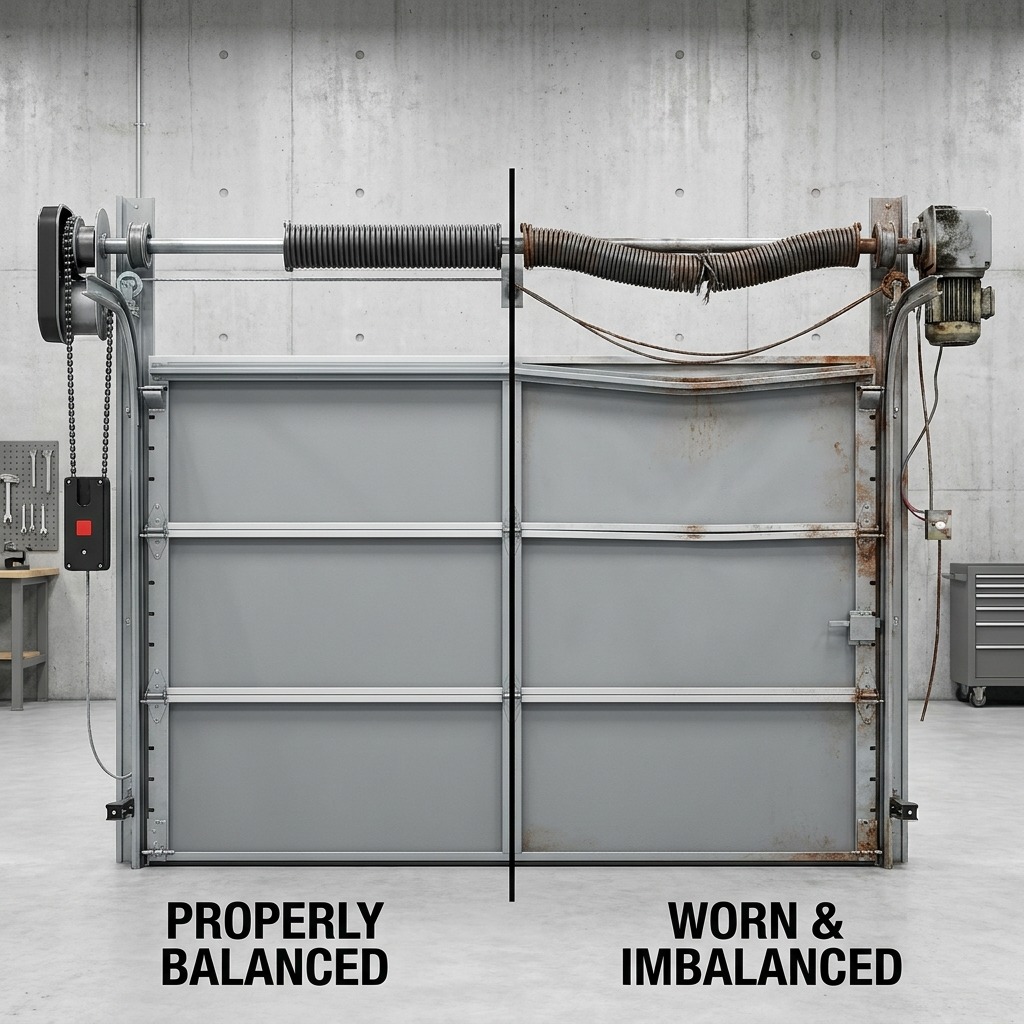
High-cycle torsion and extension springs selected and calibrated exactly to your door's weight and width dimensions to guarantee balance.
Replacement of frayed or snapped aircraft-grade steel lift cables. Re-anchoring and alignment on cable drums to prevent slack.
Straightening or replacing bent vertical and horizontal tracks. Re-anchoring tracks to wall framing to ensure parallel movement.
Understanding the mechanical design and load distribution of your residential or commercial garage door system is essential to maintaining high safety standards.
Garage door lift cables are typically made of galvanized steel wire rope, with diameters ranging from 3/32" to 5/32" for residential doors. The wires are wound in a 7x7 or 7x19 configuration (7 bundles of 19 wires each). This design provides high tensile strength and flexibility as the cable winds around the drum. When individual outer wires snap, they stick out—a sign of fraying. Once a strand fails, the remaining wires bear the extra load, accelerating the risk of complete cable failure.
Cable drums are matched to the lift style of the door (standard lift, high lift, or vertical lift). Standard lift drums are flat with spiral grooves, designed to keep the cable winding evenly. If the door meets an obstruction while closing, the cable can go slack, causing it to jump out of the drum grooves. When the door is raised again, the cable wraps around the shaft, jamming the system. We realign the drums and set the cable tension to prevent slippage.
We lock the door in position, secure the shaft, and safely release the spring tension using professional winding bars.
We unhook the old cables from the bottom brackets, inspect the brackets for rust, and slide the cables off the drums.
We install the new aircraft-grade cables, thread them into the drum grooves, secure the drums, and re-tension the springs.
Detailed answers regarding overhead door mechanics, maintenance cycles, and safety practices.
Select your city below to get local service directions and emergency technician availability: