troubleshooting guide

Garage Door Does Not Open in Cold Weather

Cold weather can freeze the bottom seal, thicken unsuitable lubricant, contract metal parts, or expose marginal spring balance and electrical connections.

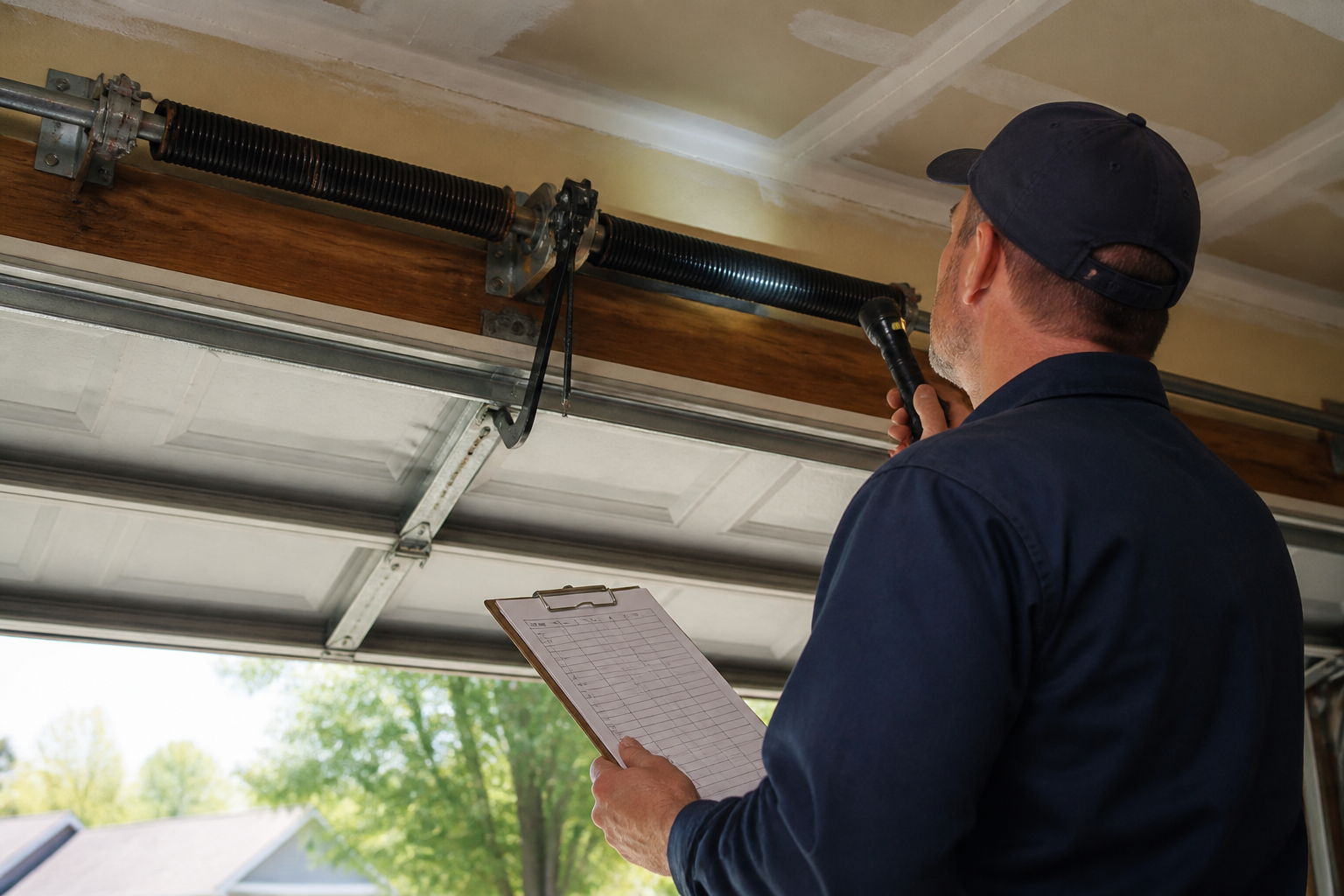
Technician inspecting a garage door while reviewing garage door does not open in cold weather
Overview

What this condition can tell you

Start by noting exactly where the door is in its travel and which control was used when the behaviour appears.

Door balance, track resistance, safety controls, and opener settings can produce similar outward symptoms.

A repeatable operating symptom is useful evidence, but it does not identify one failed part by itself.

For garage door does not open in cold weather, record the full sequence and any recent change rather than assuming the first visible part is the cause.

Safety boundary: Do not repeatedly run the opener against a frozen or unusually heavy door.
Safe checks

What a homeowner can check first

  • Check for ice bonding the bottom seal to the threshold.
  • Confirm the manual lock is released and note whether the opener hums or stays silent.
  • Look for stiff rollers or hinges without touching springs or cables.
  • Record temperature and whether the problem clears after the garage warms.

Use the manufacturer instructions for owner-level checks. A control adjustment should never be used to force a door through resistance or around a failed safety device.

Possible causes

Why garage door does not open in cold weather can happen

  • The bottom seal can freeze to wet pavement.
  • Unsuitable lubricant can thicken and increase resistance in low temperatures.
  • Metal contraction can expose tight track spacing or marginal electrical connections.
  • A fatigued spring may provide less useful support during a cold start.
Professional inspection

What a technician checks

A technician starts with door balance, alignment, attachment points, and travel before blaming the opener. The inspection then follows the command path through controls, safety devices, wiring, drive components, and settings as applicable.

That sequence matters because a heavy or binding door can damage opener components, while an electrical fault can imitate mechanical resistance. The repair scope should address the cause and any directly related wear, with parts matched to the door's weight and configuration.

For Toronto and GTA homes, the visit should also account for freeze-thaw exposure, road-salt residue, finished-garage layouts, shared walls, low headroom, and prior renovations. Ask for a written estimate before work begins and keep the service record for future comparison.

Next steps

Plan the safest next step

If the door remains level, controlled, and free of visible hardware damage, one careful observation cycle may help document the pattern. If movement is rough, uneven, or unpredictable, leave the door in its safest stable position and keep people, pets, and vehicles clear.

When arranging service, describe garage door does not open in cold weather, the point in the cycle where it happens, and any indicator lights or weather pattern. Specific observations help the technician bring relevant diagnostic tools and compatible parts without turning a symptom into an unsupported diagnosis.

FAQ

Garage Door Does Not Open in Cold Weather questions

Request service

Get help with garage door does not open in cold weather

Describe the door, opener, and operating sequence. Upright Garage Doors & Springs serves Toronto and the GTA from Vaughan.